

Walking into a recovery meeting for the first time can be overwhelming. People may be talking about meetings, steps, service, prayer, inventories, amends, and a dozen other things that seem to make perfect sense to everyone except you.
If some of the language still feels unfamiliar, the Plain Language Big Book can help make core A.A. ideas and recovery terms easier to understand as you begin.
Then somebody tells you that you need a sponsor.
It is reasonable to wonder why.
After all, you may already be attending meetings. Perhaps you have stopped drinking or using. You might be reading recovery literature, listening to other people's experiences, and trying to make better decisions. Why do you need one particular person involved in your recovery?
The simplest answer is that recovery is difficult to do alone.
A sponsor is someone who has traveled farther down the road you are trying to walk. They cannot walk it for you, but they can help you recognize the potholes.
What is a sponsor?
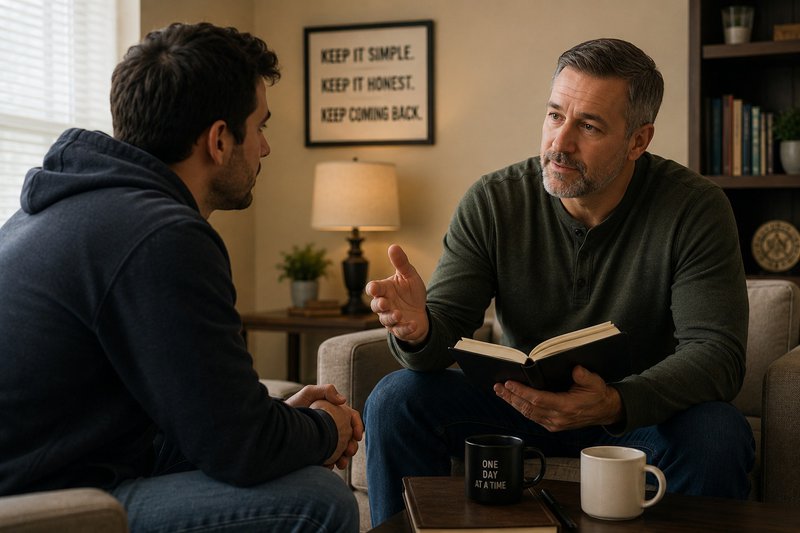
A sponsor is another person in recovery who helps guide you through the Twelve Steps and shares their experience with living a sober life.
They are not your therapist, doctor, financial advisor, attorney, parent, or boss. A sponsor does not control your life or make your decisions for you.
Instead, sponsorship is based largely on one recovering person helping another.
Your sponsor can explain how they worked the Steps. They can listen when you are struggling. They may point out something you are overlooking and encourage you to apply recovery principles when your emotions are telling you to do something very different.
Perhaps most importantly, a sponsor gives you someone with whom you can be honest.
That can be much harder than it sounds.
Our own thinking got us here

Many of us enter recovery with a long history of trusting our own thinking.
We told ourselves we could control our drinking or drug use.
We decided that this time would be different. Maybe we promised ourselves we would only drink on weekends, stop after two drinks, avoid certain substances, stay away from certain people, or never drink before a particular hour.
Then we changed the rules when they became inconvenient.
Eventually, many of us discovered that our ability to rationalize almost anything was considerably stronger than our ability to recognize when we were rationalizing.
Getting sober does not immediately change that.
The substance may be gone, but the thinking patterns can remain.
That is one reason a sponsor can become so important.
A sponsor can see what you cannot
Imagine standing with your nose pressed against a painting.
You can see individual colors and brushstrokes, but you cannot see the entire picture. Someone standing several feet behind you may see something obvious that you cannot.
Recovery can work the same way.
When we are frightened, angry, lonely, ashamed, or resentful, our perception can become narrow. We see the situation from inside our emotions.
A sponsor is standing somewhere else.
They may recognize fear underneath your anger. They might notice that you are isolating before you recognize it yourself. They may hear you blaming everyone around you while conveniently leaving your own behavior out of the story.
A good sponsor does not point these things out to humiliate you.
They do it because someone probably did the same thing for them.
Meetings and sponsorship serve different purposes
Meetings are incredibly valuable, but attending meetings and having a sponsor are not the same thing.
In a meeting, you may hear twenty people share twenty different experiences. Some will resonate with you. Others will not.
What usually does not happen is someone stopping the meeting and saying, "Hold on. You have been talking about what everyone else did for five minutes. What did you do?"
A sponsor can ask that question.
Meetings provide fellowship, identification, encouragement, and the shared experience of recovery. Sponsorship makes that experience personal.
Someone gets to know you.
Over time, your sponsor learns your patterns. They know the stories you have told before. They may notice when your behavior begins changing or when your explanations stop matching what they have come to know about you.
That relationship can provide a level of accountability that simply sitting in meetings cannot always provide.
The Steps are meant to be worked

It is easy to read the Twelve Steps.
Working them is something different.
A sponsor can share their experience, but it can also help to have a place to write things down and return to them. A practical Twelve Step workbook can give your reflections, questions, and Step work some structure between conversations.
Concepts such as surrender, inventory, character defects, amends, prayer, meditation, and service can seem straightforward until we have to apply them to our own lives.
That is where sponsorship becomes particularly valuable.
A sponsor can explain how they approached a Step and help you understand what it asks of you. When you become stuck, they can help you distinguish between genuinely needing more time and simply avoiding something uncomfortable.
That distinction matters.
There were probably plenty of things we avoided while drinking or using because they were uncomfortable. Recovery eventually asks us to face some of them.
Doing that with someone who has already been through the process can make an enormous difference.
Sponsorship teaches us to ask for help
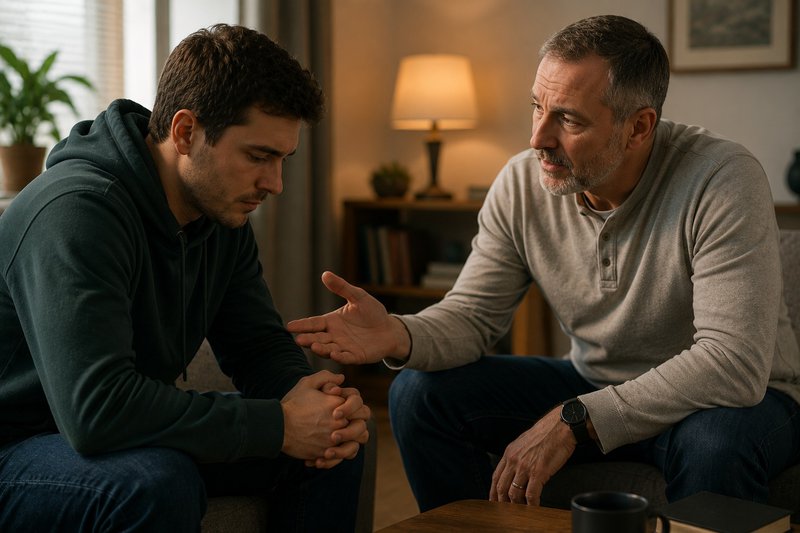
For some people, getting a sponsor is uncomfortable precisely because it requires asking another person for help.
We may be accustomed to handling everything ourselves.
"I've got it."
"I can figure this out."
"I don't want to bother anyone."
"I should be able to handle this."
Those ideas can sound like independence. Sometimes they are pride, fear, or isolation wearing a more respectable disguise.
Recovery teaches us something different.
Asking for help is not the same as being helpless.
Calling your sponsor before you make a bad decision is not weakness. It is learning from experience.
You are beginning to recognize that you do not have to solve every problem alone.
It can help to make asking easier before you are overwhelmed. Build your support phone list ahead of time, including your sponsor, trusted peers, meeting contacts, and appropriate professional support.
Call before, not after
One of the most useful habits you can develop in early recovery is learning to pick up the phone before you act.
That sounds obvious.
It frequently isn't.
We can spend an hour thinking about something, become increasingly upset, make a terrible decision, and then call our sponsor to explain what happened.
A sponsor can help with the aftermath, but sponsorship works much better when we call before creating the aftermath.
Before sending the angry text.
Before quitting the job.
Before ending the relationship.
Before telling someone exactly what you think of them.
Before convincing yourself that one drink will not hurt.
A five-minute conversation can sometimes interrupt a thought process that has been building inside your head for hours.
When a craving or difficult moment is building, a simple plan can make that call easier. This craving response playbook includes practical ways to pause, reach out, and take the next safe action.
The goal is not to have your sponsor make the decision. The goal is to introduce another perspective before you make yours.
A sponsor should not run your life
There is an important distinction between guidance and control.
Sponsorship should help you become more capable of applying recovery principles to your own life, not more dependent upon another human being to make every decision.
Your sponsor may offer suggestions based on experience. You remain responsible for your choices.
Likewise, having a sponsor does not mean you should ignore qualified professional help. Medical problems belong with medical professionals. Mental health concerns may require a counselor, psychologist, psychiatrist, or another qualified provider. Legal questions belong with an attorney.
Sponsors have experience with recovery.
That experience can be tremendously valuable without making them experts on everything else.
Healthy sponsorship recognizes those boundaries.
A good sponsor can share experience and encourage you to stay connected, but they are not a substitute for qualified care. A.A.’s own sponsorship guidance makes this distinction clear, and the National Institute on Alcohol Abuse and Alcoholism notes that some concerns need the support of a trained health professional.
What should I look for in a sponsor?
You do not have to find the perfect person.
They do not exist.
Look for someone who has the kind of recovery you respect. Pay attention to how they live rather than simply how well they speak in meetings.
Do they work the Steps?
Do they have a sponsor themselves?
Are they active in recovery?
Do they seem honest?
Can they admit when they are wrong?
Do they practice the principles they talk about?
You are not necessarily looking for someone who has your personality, background, career, education, or interests. In fact, someone who thinks differently from you can sometimes be exactly what you need.
The purpose is not to find a new best friend.
The purpose is to find someone who can help you work a program of recovery.
You can keep the process simple. A.A. suggests approaching a more experienced member who seems compatible and asking if they are willing to sponsor you. Its Questions and Answers on Sponsorship can also help if you are unsure what to ask or what to do if the first relationship is not the right fit.
What if I choose the wrong sponsor?
Then you choose another one.
Getting a sponsor is not a lifetime contract.
Sometimes sponsorship relationships simply do not work. Personalities clash. Communication styles differ. Circumstances change. A sponsor may move away, become unavailable, or no longer be the right person to help you move forward.
You can change sponsors.
What you want to avoid is using the search for the "perfect sponsor" as an excuse for having no sponsor at all.
There is a difference between thoughtfully choosing someone and endlessly shopping for someone who will never challenge you.
Sometimes the sponsor we want is the person who agrees with us.
The sponsor we need may be the person willing to tell us when we are wrong.
Honesty makes sponsorship work
You can have the most experienced sponsor in the world and receive very little benefit if you are not honest with them.
A sponsor can only respond to what you tell them.
If you leave out the embarrassing parts, minimize your behavior, exaggerate what someone else did, or carefully edit the story so you look reasonable, you are asking them to help with a situation that does not actually exist.
Many of us became very skilled at managing what other people knew about us during active addiction.
Recovery asks us to practice something different.
We tell the truth.
Sometimes awkwardly.
Sometimes reluctantly.
Occasionally after sitting in the car for ten minutes working up the courage to make the call.
But we tell it.
Honest Step work can bring up anger, fear, shame, and old resentments. Learning to work through difficult Step emotions can help you stay present enough to tell the truth and keep moving forward.
Every time we do, honesty becomes a little more natural.
Eventually, someone may need you
There is another beautiful part of sponsorship that may be difficult to imagine when you are new.
Someday, you may be the person receiving the phone call.
Another newcomer may walk into a meeting frightened, confused, angry, or completely overwhelmed. They may hear you share something that gives them hope.
Eventually, they may ask you the same question you once asked someone else:
"Will you sponsor me?"
Then you will have an opportunity to give away what was freely given to you.
You will not need to have all the answers. Your experience will be enough.
You can tell them what you did.
You can walk beside them through the Steps.
You can answer the phone when their thinking gets sideways.
You can remind them that whatever they are experiencing today does not have to be experienced alone.
That is one of the ways recovery continues from one person to another.
You do not have to figure this out alone

A sponsor cannot keep you sober.
They cannot work the Steps for you, prevent every mistake, or make your problems disappear.
What they can do is walk beside you while you learn how to live differently.
They can share their experience when you are unsure what to do. They can challenge your thinking when you cannot see past it. They can remind you of what has worked when you are tempted to abandon it.
Most of all, they can help you discover one of the fundamental lessons of recovery:
You do not have to do this alone.
If you are attending meetings but still do not have a sponsor, consider making your next step very simple.
Recovery support is not one-size-fits-all, and a sponsor is not the only source of help. Still, evidence reviews find that active involvement in Twelve Step support can be a meaningful part of recovery for many people. You can read more about the evidence on Twelve Step support if you want the research context behind the experience so many people describe in meetings.
Look around the room for someone whose recovery you respect.
Walk up to them after the meeting, and ask them to sponsor you.