

A resentment can feel manageable until you begin writing about it. Then the anger may return with surprising force. Fear can surface during a conversation with your sponsor. Shame may become intense when you review the harm caused by your drinking or drug use. Even when you are willing to grow, your nervous system may respond as if the old situation is happening again.
This does not mean you are doing the Steps incorrectly. It means that honest recovery work can bring up powerful emotions. Emotional regulation skills can help you stay present, think more clearly, and continue working the program without becoming overwhelmed.
The Twelve Steps include moral inventory, sharing vulnerable truths with another person, becoming willing to change, listing people who were harmed, and making direct amends when possible. (aa.org) These practices can be approached with spiritual guidance, sponsorship, written reflection, counseling, and practical coping tools.
Why resentments can become stronger during the inventory phase of twelve step work

A resentment is more than anger. It may include grief, betrayal, fear, helplessness, guilt, disappointment, or a wish for someone else to suffer. When you begin taking your inventory, you may begin noticing how long you have carried these feelings and how they have influenced your decisions.
You may also remember events differently than you expected. A person you blamed may have caused real harm, while you may also recognize your own reactions, patterns, or part in the conflict. Holding both truths can be difficult.
Step work does not require you to deny what happened. It also does not require you to excuse abuse, remove healthy boundaries, or accept unsafe contact. The goal is to become more honest about what you feel, what you did, what you can repair, and what is outside your control.
Before beginning a difficult inventory session, ask:
- Am I physically rested enough to do this today?
- Do I have someone I can contact if strong emotions rise?
- Can I pause without treating the pause as avoidance?
- Is this situation safe to discuss with the person involved?
- Would support from a counselor be appropriate?
These questions help you approach the work with steadiness rather than pressure.
Emotional regulation is not avoidance

Emotional regulation does not mean getting rid of anger, fear, or shame before you work a Step. It means learning how to notice an emotion without allowing it to make every decision for you.
You might still feel angry while choosing not to send an aggressive message. You might feel ashamed while telling the truth to your sponsor. You might feel afraid while taking one careful step toward an appropriate amends. Learning to recognize these emotions and the urges that come with them can create a small but important space between what you feel and what you do.
Developing emotional regulation skills can help make that space easier to recognize and use. For readers who want structured guidance, the Emotional Regulation and Substance Use Disorder workbook offers practical exercises for noticing emotional triggers, slowing down reactive urges, and choosing a recovery-supportive next step. It can be used alongside meetings, sponsorship, counseling, and written Step work.
A useful recovery goal is not emotional calm at all times. It is the ability to remain connected to your values while emotions move through you.
Use cognitive reappraisal during written inventory
Cognitive reappraisal means looking at a thought or situation from a more balanced perspective. It is not positive thinking, and it does not ask you to pretend that harm was acceptable.
For example, an inventory thought might be:
They ruined my life, and I will always be damaged by what they did.
A more balanced version could be:
What happened affected me deeply. I cannot change it, but I can decide what support, boundaries, and recovery actions I need today.
The second statement does not erase the injury. It creates room for choice.
Try adding three columns to your written inventory:
| What happened | What I felt and believed | What I can choose now |
|---|---|---|
| A family member confronted me about my substance use. | I felt exposed and thought they were trying to control me. | I can consider what was true in their concern and discuss my reaction with my sponsor. |
| I missed an important obligation while using. | I felt shame and decided I was beyond repair. | I can name the harm, make a plan to repair it, and avoid turning one action into a permanent identity. |
| Someone did not respond to my amends request. | I felt rejected and angry. | I can respect their choice and continue living differently without demanding a particular response. |
Practice self-compassion without excusing harm

Shame often says, “I am bad.” Accountability asks a different question: “What did I do, and what can I do next?”
Self-compassion helps you face your behavior without collapsing into self-hatred. It can make honesty more sustainable because you are less likely to hide, defend, or abandon the process when painful feelings appear.
A simple self-compassion exercise has three parts:
-
Name the pain.
“This is difficult to look at.” -
Recognize the human experience.
“Many people in recovery struggle with guilt, fear, and regret while taking inventory.” -
Offer a responsible next step.
“I can tell the truth, ask for guidance, and repair what I can without harming anyone.”
Self-compassion is not a way to avoid Step Eight or Step Nine. It can help you approach those Steps with humility instead of panic.
It is also important to remember that an amends is not a demand for forgiveness. The other person may not want contact, may need distance, or may respond with anger. Your responsibility is to make a thoughtful, safe, and appropriate effort, usually with guidance from a sponsor and, when needed, a counselor or other professional.
Ground yourself before sharing vulnerable truths

Step Five involves admitting the exact nature of wrongs to God, to yourself, and to another human being. (aa.org) Sharing honestly can be relieving, but it can also activate fear and shame.
A grounding practice can help you stay connected to the present before and after the conversation.
Try this brief routine:
- Place both feet on the floor.
- Notice five things you can see.
- Notice four things you can feel, such as the chair beneath you or your hands resting together.
- Take a slow breath and make the exhale slightly longer than the inhale.
- Look around the room and name the date, location, and one thing that is safe in the present moment.
- Remind yourself, “I am sharing this one part at a time.”
You can also agree on a pause signal with your sponsor. Taking a short break does not mean you are refusing honesty. It may help you return to the conversation with more clarity.
If the material involves severe trauma, violence, current danger, or symptoms such as dissociation, consider working with a licensed mental health professional. A sponsor can offer valuable Twelve Step support, but sponsors are not substitutes for clinicians.
Give yourself permission to pause
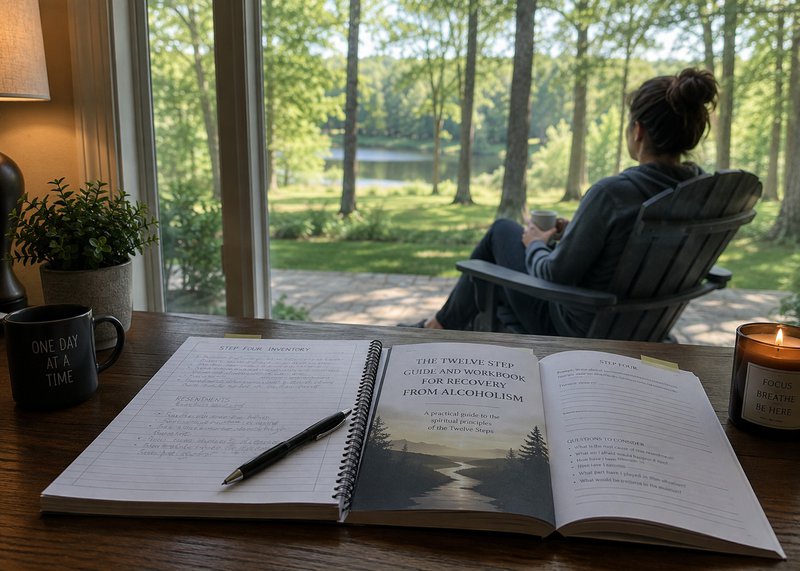
Taking a break does not mean you are avoiding the work. Sometimes stepping away for a few minutes can help you regulate your emotions so you can return with a clearer mind and a greater willingness to be honest.
During difficult Step work, this might mean:
- Writing a few lines of an inventory and then taking a short walk.
- Pausing an amends practice with your sponsor when emotions become intense.
- Sharing one difficult truth in a meeting without feeling obligated to tell the entire story.
- Sitting with an uncomfortable feeling for a few minutes and then doing something grounding.
- Reviewing one section of your inventory and returning to the rest later.
The purpose is not to escape uncomfortable emotions. It is to keep discomfort from becoming so overwhelming that you shut down, lash out, abandon the work, or become tempted to return to old coping behaviors.
When you take a break, make it intentional. Decide that you are pausing rather than quitting, use the time to ground yourself, and return to the work when you feel ready. You might ask yourself what emotion came up, what you noticed in your body, what helped you regain your balance, and what support you need before continuing.
If Step work brings up traumatic memories, intense panic, thoughts of self-harm, or a strong desire to use, a break may not be enough. Stop the exercise and seek appropriate professional support before continuing with material that feels unsafe or overwhelming.
Match emotional regulation tools to the Step
Different parts of Twelve Step work may call for different forms of support.
| Recovery task | Emotions that may arise | Regulation practice |
|---|---|---|
| Step Four inventory | Anger, grief, fear, confusion | Grounding, paced writing, balanced reappraisal |
| Step Five sharing | Shame, vulnerability, fear of rejection | Breathing, self-compassion, planned pauses |
| Steps Six and Seven | Resistance, sadness, uncertainty | Notice-and-name practice, prayer, sponsor discussion |
| Step Eight list | Guilt, regret, anxiety | Separate responsibility from identity, take one person at a time |
| Step Nine amends | Fear, anger, grief, hope | Rehearsal, boundary planning, brief exposure, professional consultation when needed |
| Step Ten inventory | Irritation, defensiveness, discouragement | Pause before responding, make a factual review, promptly correct what is yours |
Bring emotional regulation into meetings and sponsorship
Emotional regulation can become part of ordinary recovery, not just a tool used during a crisis.
At a meeting, you might share:
I am working on a resentment, and I notice that I want to tell the story without looking at my own actions. I am trying to slow down and ask for guidance before I act.
With a sponsor, you might ask:
Can we spend a few minutes helping me separate what happened to me from what I did afterward?
In a written inventory, you might add:
- The event as I remember it
- The emotion I felt then
- The emotion I feel now
- The action I took
- The belief I carried
- The part that is mine
- The boundary or repair I may need
- The next safe action
This structure can prevent an inventory from becoming either a case against someone else or an attack on yourself.
Pair spiritual work with counseling and community support

Twelve Step meetings and sponsorship provide connection, shared experience, spiritual practice, and a framework for personal change. Counseling can add support for trauma, depression, anxiety, emotional regulation, family conflict, medication questions, and co-occurring mental health or substance use concerns.
These forms of support can work alongside one another. You do not have to choose between spiritual work and practical coping skills.
In the United States, SAMHSA’s FindTreatment.gov can help people search for mental health and substance use treatment services by location and other filters. SAMHSA also lists peer-support and community resources for people seeking recovery support. (samhsa.gov)
You can ask a treatment center, counselor, or community program:
- Do you understand Twelve Step recovery?
- Can you coordinate care with my permission?
- Do you offer support for both substance use and mental health concerns?
- How do you handle trauma-related symptoms?
- Can you help me plan for cravings or emotional emergencies?
- Are there meetings or peer-support groups available nearby?
You can also use official fellowship resources to locate meetings and recovery literature. Alcoholics Anonymous provides an outline of the Twelve Steps, while Narcotics Anonymous offers meeting and virtual meeting resources. (aa.org)
A simple plan for the next difficult emotion
When resentment, fear, or shame rises during Step work, try this sequence:
- Pause. Do not send the message, make the call, or confront someone while highly activated.
- Name the emotion. Use plain language: “I feel angry and afraid.”
- Ground in the present. Notice your feet, your breathing, and your surroundings.
- Check the thought. Ask, “Is this completely true, or is there a more balanced way to describe it?”
- Separate responsibility. Identify what belongs to you and what does not.
- Ask for guidance. Contact your sponsor, counselor, trusted support person, or recovery group.
- Choose one safe action. Write one paragraph, make an appointment, attend a meeting, or wait until you are steadier.
You do not have to complete every part of the work in one sitting. Recovery is often built through small honest actions repeated over time.
Continue the work with patience
Resentments may not disappear just because you write them down once. Emotional regulation may feel awkward before it becomes familiar. You may need to revisit an inventory, ask new questions, or seek additional support as your understanding changes.
The aim is not to become someone who never feels anger, fear, or shame. The aim is to become someone who can notice those emotions, bring them into the light, and choose a response that supports recovery.
A workbook can give your thoughts a place to land. A meeting can remind you that you are not alone. A sponsor can help you apply the Steps. A counselor can offer specialized support for emotional and mental health challenges. Together, these resources can help you keep doing the next piece of honest work, one day at a time.
For practical prompts and structured recovery exercises, explore the Recovery4Life workbook collection. The resources are designed to support written Step work, emotional wellbeing, craving management, and daily recovery practice. (recovery4life.store)