

A craving can begin as a tight feeling in your chest, a restless mind, a familiar thought, or the sudden belief that using would make everything easier. In early recovery, the goal is not to argue with the craving until you feel perfect. The goal is to notice what is happening, create a little space, and take the next safe action. Having a simple craving response playbook can help you know what to do in those moments, especially when the urge makes it difficult to think clearly.
Cravings can be connected to people, places, routines, emotions, stress, sleep changes, and withdrawal-related discomfort. Planning what you will do before the urge arrives can make it easier to respond instead of returning to bad habits automatically. (niaaa.nih.gov)
Start with the body

When a craving appears, pause before trying to solve your whole life. Begin by noticing the physical experience.
Ask yourself:
- Where do I feel this in my body?
- Is the sensation tight, hot, cold, restless, numb, or shaky?
- What is my breathing doing?
- What emotion is present?
- What happened in the few minutes or hours before this feeling?
You do not need to judge the answer. Try describing it in simple language: “My stomach feels tense,” “My hands are restless,” or “I feel lonely.”
This kind of observation is the first part of urge surfing, a technique that helps you notice a craving as a changing experience rather than an instruction you must follow. SAMHSA describes urges as waves that rise, reach a peak, and gradually lose strength. When cravings arrive alongside anger, shame, anxiety, or emotional overwhelm, it can help to practice practical emotional regulation skills that create a pause between a difficult feeling and the next action. The purpose is not to force the craving away, but to practice experiencing it without immediately acting on it. (store.samhsa.gov)
The five-minute craving response
Use the following sequence when you need a clear plan.
1. Name the craving
Say quietly or write:
“This is a craving. It is uncomfortable, but it is not a command.”
Naming the experience can help separate the feeling from the action. You are not denying the urge or desire. You are recognizing it.
2. Check HALT
HALT stands for:
- Hungry
- Angry
- Lonely
- Tired
These needs do not explain every craving, but they can point to a practical next step. Eat something simple if you are hungry. Step away and cool down if you are angry. Call someone if you are lonely. Rest or reduce stimulation if you are tired.
You might also add two personal checks:
- Am I in pain?
- Am I overwhelmed, anxious, or emotionally flooded?
The question is not, “Why am I like this?” Try asking, “What does my body or mind need in the next ten minutes?”
In early recovery, food, rest, movement, and a calmer routine can make a real difference over time. If you are rebuilding these basics one day at a time, build supportive daily routines that care for both your body and your recovery.
3. Delay the decision
A delay creates space to choose a different response to the same cues that usually lead to using.
Tell yourself:
“I will wait ten minutes before making any decision.”
During those ten minutes, change your location if possible. Move to a public or recovery-supportive space. Put distance between yourself and alcohol, drugs, paraphernalia, money set aside for use, or people connected to using.
A delay is not a promise about the rest of your life. It is one small interruption in the pattern.
4. Distract with a specific action
Choose an activity that uses your attention or changes your physical state:
- Take a short walk.
- Shower or wash your face.
- Make tea or drink water.
- Do a simple household task.
- Read a recovery passage.
- Write one page without editing.
- Attend a meeting or join an online support group.
- Leave the room where the craving started.
- Listen to a calming playlist.
- Call or text a trusted person.
SAMHSA recommends practical coping and avoidance skills such as stress reduction, sleep, journaling, planned activities, and distraction from high-risk situations. (store.samhsa.gov)
5. Connect before the craving grows
Reach out while you can still make a clear choice. You do not need to wait until the situation becomes an emergency.
A short message is enough:
“I am having a strong craving and could use company. Can you talk with me for ten minutes?”
Or:
“I am safe right now, but I do not want to be alone with this urge. Can you help me choose my next step?”
If the first person does not answer, try the next person. Build a list of several contacts, including a sponsor, peer, counselor, trusted friend, family member, treatment professional, or meeting contact.
A quick grounding exercise

Grounding can help when a craving comes with panic, racing thoughts, anger, or a sense of disconnection.
Try this:
- Put both feet on the floor.
- Press your feet down and notice the support beneath you.
- Name five things you can see.
- Name four things you can feel, such as clothing, a chair, or the floor.
- Name three things you can hear.
- Name two things you can smell.
- Name one thing you want to remember for the next ten minutes.
Keep the final statement realistic:
“I only need to get through this next step.”
You can also lengthen your exhale. Breathe in gently, then breathe out a little more slowly. If focusing on your breath increases anxiety, return to your surroundings instead.
Build a personal trigger map
A craving log is not a record of mistakes. It is a way to notice patterns and automatic habits that can help you plan. Tracking patterns can help you recognize the neurological feedback loop between triggers, cravings, and familiar responses.
Track the following for one or two weeks:
| Date and time | Mood | Sleep | Situation or trigger | Craving intensity | Action taken | What helped |
|---|
Looking back at a few honest entries can help you notice the emotions, sleep changes, people, places, and automatic habits that tend to come before a craving. If structured writing helps you slow down and reflect, you may also want to work through recovery pattern sat your own pace.
Once you see a pattern, add a recovery cue. This might be a meeting reminder, a phone contact saved under a clear name, a workbook beside your bed, walking shoes near the door, or a note that says, “Call before you decide.” Recovery cues can help connect everyday objects, places, and routines with healthy choices, support, and new habits. (store.samhsa.gov)
Create a wallet-sized crisis card
Write this information on an index card or save it in your phone.
My craving response card
When I notice a strong craving, I will:
- Move away from the trigger.
- Check HALT.
- Delay for ten minutes.
- Drink water, eat if needed, and change my body position.
- Call or text ____________________.
- Go to ____________________.
- Attend or contact ____________________.
- Review my reasons for recovery.
- Ask for professional help if I cannot stay safe.
My warning signs are:
People I can contact:
- Name: ____________________ Phone: ____________________
- Name: ____________________ Phone: ____________________
- Name: ____________________ Phone: ____________________
Professional and emergency support:
- Counselor or treatment provider: ____________________
- Local meeting or peer-support contact: ____________________
- Nearest emergency department: ____________________
- 988 Suicide & Crisis Lifeline: Call or text 988
The 988 Lifeline provides free, confidential call, text, and chat support for people experiencing emotional distress or a mental health crisis. If there is an immediate medical emergency, call 911 or go to the nearest emergency department. (988lifeline.org)
Asking for help
When you are overwhelmed, making a phone call can feel harder than sending a message. Save a few scripts in your phone so you do not have to think about what to say during a craving.
Text to a trusted person
“I am having a craving and need help staying away from alcohol or drugs. Can you call me or sit with me for a little while?”
Text to a sponsor or peer
“I am feeling overwhelmed today. I have not taken a drink or used, but I am thinking about it. Are you available to go to a meeting with me?”
Call to a counselor
“I am in early recovery and having stronger cravings than usual. I want help making a safe plan for tonight.”
Message after a relapse
“I relapsed and need help. I am scared and do not want to go back down the road I was on before. Can you listen or help me figure out what I should do?”
A return to use is a reason to reconnect with support, not a reason to disappear. Be honest about what happened, what you used, how much, when you used it, and whether you are experiencing any concerning symptoms. A treatment professional can help you decide what support is appropriate.
Know when a craving may be more than a craving
Cravings can be part of early recovery, but withdrawal can also require medical attention. Alcohol withdrawal may include symptoms such as shaking, sweating, anxiety, nausea, vomiting, sleep problems, changes in heart rate or blood pressure, seizures, or delirium tremens. Stopping heavy, long-term alcohol use suddenly can be dangerous, and some people need medical monitoring or detox support. (niaaa.nih.gov)
Seek urgent medical help for severe confusion, hallucinations, seizures, trouble breathing, loss of consciousness, severe vomiting, chest pain, or any symptom that feels life-threatening. Do not try to manage potentially dangerous withdrawal alone.
If you are thinking about suicide, self-harm, or harming someone else, call or text 988. If you are in immediate danger, call 911.
Prepare before the next difficult moment
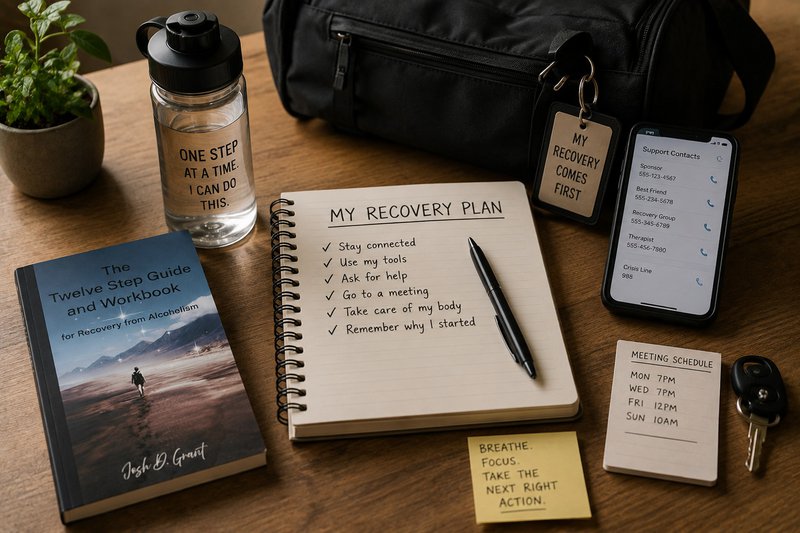
A useful early recovery plan is simple enough to follow when your brain is tired. Keep your phone charged. Store important numbers where you can find them. Remove substances, paraphernalia, and smoking supplies from your immediate environment when it is safe to do so. Plan transportation to meetings, appointments, or supportive places. Decide who you will contact before you need them, especially before a difficult moment reaches a problem phase.
Recovery support can also include structured writing. Printable recovery reflection worksheets from Recovery4Life offer guided prompts for Steps 4, 8, and 10, giving you a practical place to notice patterns, write honestly, and return to Twelve Step principles one step at a time.
You do not have to complete every exercise today. Write down one trigger. Send one honest text. Drink some water. Move to a safer place. Ask for help before the urge becomes harder to manage.
The next action does not need to solve everything. It only needs to support your recovery for this moment.