

Getting sober can begin as an intensely personal decision. In the beginning, much of recovery is understandably focused on staying sober through difficult times: making it through today without drinking or using, getting to meetings, finding support, repairing immediate damage, learning new coping skills, and beginning to understand what happened.
For some people, this may involve an alcohol assessment, learning about genetics and other risk factors, or speaking with a health professional about alcohol abuse, alcohol overuse, and any other chronic medical conditions.
But recovery changes over time.
Eventually, the question may shift from “How do I stay sober?” to something larger:
“What can I do with the sobriety I have been given?”
There is no shortage of sobriety strategies. For many people in long-term recovery, one answer is service.
Giving back does not mean that you have everything figured out. It does not require you to become a counselor, start an organization, give speeches, or dedicate every free hour to recovery. Sometimes carrying the message is as simple as answering the phone when someone is struggling, making coffee before a meeting, giving a newcomer a ride, or sitting beside someone who does not want to walk into their first recovery meeting alone.
At other times, service means reaching beyond the places where recovery is comfortable and familiar. It may mean bringing meetings into treatment centers, supporting recovery programs in correctional facilities, helping people returning from incarceration, volunteering in your community, or making recovery resources available to people who otherwise could not afford them, including those without private insurance.
The form can change. The principle remains the same. Recovery becomes stronger when it stops being only about us.
Why Giving Back Matters in Staying Sober

Early sobriety usually contains plenty of urgency. Often times people are facing the consequences of their past actions and are very motivated to change. There are court dates to keep, relationships to repair, cravings to manage, meetings to attend, and new habits to build. The consequences of returning to alcohol or drugs may still be painfully visible, including severe negative consequences and life-threatening consequences.
Five, ten, or twenty years later, life can look very different. That is a wonderful thing. It is also one of the reasons long-term recovery requires continued attention. The crisis that originally brought someone into recovery may be gone. The court case has ended. The family may trust again. The job situation may have improved. Financial problems may have stabilized. Going to a bar may no longer seem particularly tempting.
Recovery can quietly become routine. Service can help interrupt that complacency. Service can be the cure for complacency. When recovery begins to feel automatic, it can help to return to the inner work that keeps us connected. Read more about emotional sobriety when recovery feels routine.
For people recovering from alcoholism and alcohol-related problems, continued connection can also help them recognize alcoholics’ alcoholism warning signs before a drinking problem becomes more serious. Dependence and tolerance may change over time, so paying attention to warning signs and triggers remains important.
When you sit across from someone who has three days sober, you are reminded what three days sober felt like. Listening to someone describe the destruction caused by their drinking or drug use, you may recognize parts of your own story. Watching someone begin to experience hope after believing that life could never change, you remember why recovery mattered so much in the first place.
Helping another person can reconnect us with gratitude. For someone in those earliest days, practical support can matter too. The early-recovery support for cravings includes checklists designed to help people build steadier routines through difficult moments.
The problems of everyday life do not disappear in sobriety. There are still difficult bosses, broken-down cars, unexpected bills, relationship problems, sick relatives, frustrating people, and days when absolutely nothing seems to go right. Service helps put those problems into perspective too. It reminds us that staying sober is not simply something we achieved years ago. It is something we continue to practice every day.
Carrying the Message Does Not Require Perfection

One of the barriers to service is the belief that we are somehow not qualified. Maybe you think you do not have enough sober time to say anything. Emotional regulation may be a constant struggle with anger, anxiety, relationships, and finances. You may have trouble quoting recovery literature like someone else can with ease. Does public speaking make you uncomfortable? Join the club. Perhaps you just do not believe you have anything particularly profound to say.
Fortunately, carrying the message does not require perfection. In fact, sometimes the most useful thing you can offer another person is not advice at all. It is experience.
For anyone facing abuse, anxiety, or a dual diagnosis involving depression, simply being heard by someone who understands can be one of the most important tips for getting through difficult times.
| You can say: |
|---|
| I remember feeling like that. |
| This is what helped me. |
| I don't know the answer, but I can listen. |
| You don't have to figure everything out tonight. |
| Do you want to go to a meeting with me? |
People struggling with addiction are frequently surrounded by advice. They may have heard it from family members, judges, employers, doctors, counselors, probation officers, spouses, and friends.
What they may not have experienced is hope from someone who genuinely understands.
A person in recovery can offer something different:
“I have been where you are, and I got out.”
Getting that message across plants a seed of hope that their lives can change too. While there may not be a simple cure for addiction, recovery can create meaningful and lasting change.
There Are Many Ways to Be of Service
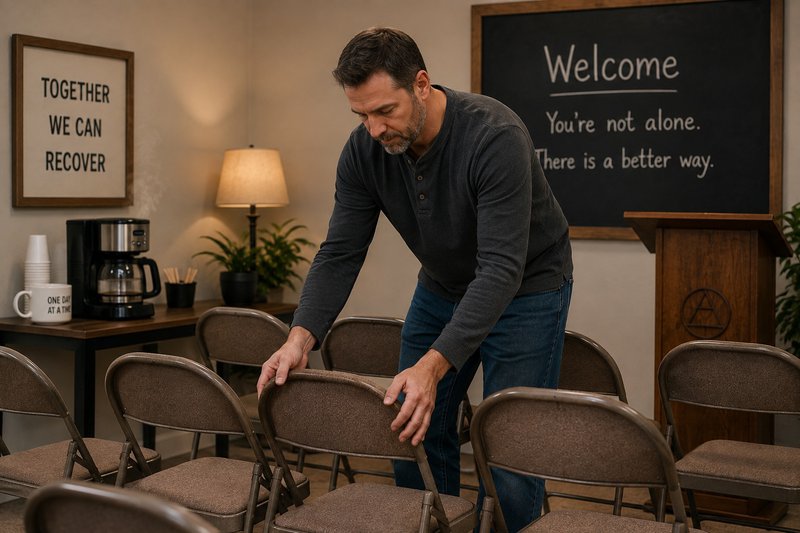
When people hear the word service, they sometimes imagine being addiction counselors or holding an official position in a recovery organization. Those are certainly some ways to serve, but those are far from the only ways. An addiction specialist, internal medicine physician, or other health professional may provide clinical care, while people in recovery offer connection and lived experience.
You can chair a meeting, set up chairs, make coffee, clean up afterward, greet newcomers, or volunteer for a service position. You can give someone a ride when transportation is preventing them from attending. Even simply speaking up about where you are in your recovery journey can give a newcomer the courage to do the same.
These five strategies—listening, connecting, encouraging, showing up, and helping with practical needs—can make service feel manageable.
| Some simple ways to be of service to others |
|---|
| Answer the phone when people call. |
| Visit someone in the hospital |
| Help someone find a meeting after they move to a new city |
| Introduce yourself to the nervous new person standing by the door |
| Share your experience in and outside of recovery programs |
Sometimes service has nothing obviously to do with addiction.
You may simply notice that somebody needs help—and help.
The important part is developing the habit of asking a different question.
Instead of always asking, “What do I need today?”, we ask: “Where can I be useful today?”
That small shift can make an enormous difference.
Service Helps Move Us Outside Ourselves
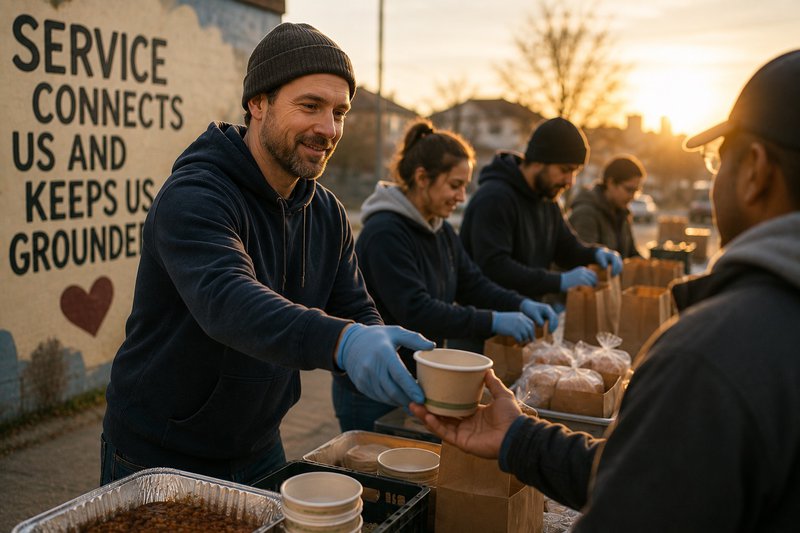
Addiction can create an extraordinarily small world. Our attention was focused on obtaining alcohol or drugs, using them, recovering from their effects, hiding our behavior, managing consequences, and figuring out how we are going to do it all over again.
Even after the substance is gone, that inward focus can remain. It is easy to become consumed with our problems, our resentments, our disappointments, our fears, and what other people think of us.
Service disrupts that cycle. It is hard to spend every minute obsessing over yourself while genuinely listening to someone else.
That does not mean service should become a way of avoiding your own problems. There is an important difference between helping others and using other people's problems to escape your own responsibilities.
Healthy service exists alongside personal recovery.
We still need boundaries, rest, and our own support systems. Likewise, we still have to take responsibility for our own emotional and spiritual health through self-care.
A healthy diet and sufficient sleep may sound basic, but they can support the energy and stability needed for staying sober and available to others. If you are rebuilding those foundations, support your sober self-care routine with practical habits for movement, rest, and emotional balance.
But within those boundaries, helping another person can provide something that endless self-analysis cannot.
It gives recovery purpose.
You Do Not Have to Save Anyone

There is another side of service that deserves attention.
People in recovery sometimes become so enthusiastic about helping that they begin believing they are responsible for another person's recovery. We are not.
Offering someone a ride to a meeting may help them get through the door, but choosing to participate is up to them. Giving someone a workbook provides an opportunity to begin doing the work, although we cannot make them complete it. A workbook can offer a private place to reflect, but the willingness to use it has to belong to the individual. For people who want structure for that process, they can work through the Twelve Step sat their own pace.
Sharing our experience can offer hope and perspective, but the other person decides whether they are ready to hear the message. When someone calls for help, we can answer the phone, listen, and offer suggestions without expecting them to follow every piece of advice we give. Ultimately, we can care deeply about another person and support their recovery while recognizing that we cannot control the choices they make or the outcome of their journey.
This distinction is important because otherwise service can turn into frustration, resentment, or burnout. It is important that we exercise self-care along the way. If we do not take care of ourselves, we diminish our ability to be helpful to others.
Our responsibility is to make help available, not to become addiction specialists. What another person chooses to do with that opportunity belongs to them.
Sometimes we plant seeds that we never get to watch grow. Someone may hear something you say today and ignore it completely. Six months later, sitting alone somewhere after another painful consequence, they may remember your words. You may never know.
The value of service cannot always be measured by immediate results.
Taking Recovery Into Treatment Centers
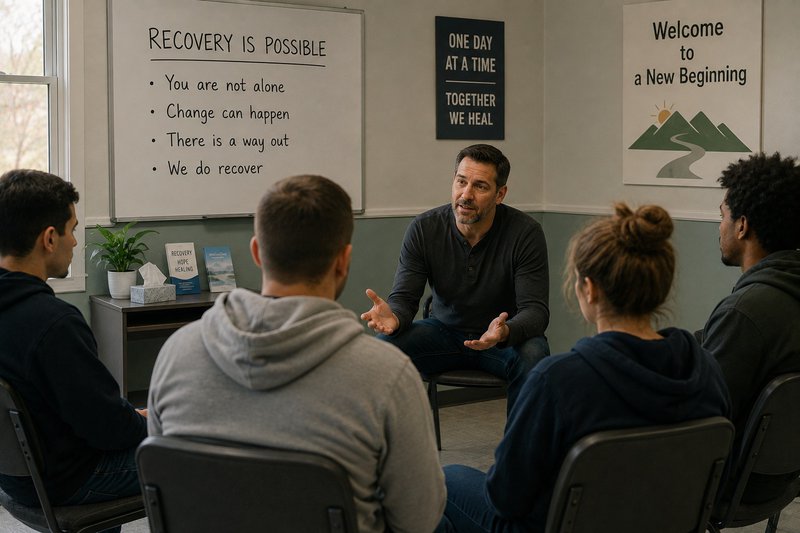
Treatment facilities are natural places for people in recovery to carry the message.
Someone entering treatment may be frightened, angry, ashamed, physically exhausted, or unsure whether they even want sobriety. Others desperately want recovery but cannot imagine living without alcohol or drugs. For some people, the scary part is believing that long-term addiction is not reversible.
People with long-term recovery can provide something important in that environment: a picture of what life afterward can look like.
Professional treatment and peer recovery support have different roles. Counselors, physicians, nurses, therapists, social workers, and other professionals bring specialized expertise. People in recovery bring lived experience.
Those roles can complement one another.
When volunteers bring recovery meetings into treatment facilities, residents have an opportunity to experience the recovery community before leaving the structured treatment environment.
That connection can matter.
For treatment centers, sponsors, and recovery groups, having both foundational reading and guided reflection materials available can make the next step feel more approachable. The resources for newcomers and sponsors bundle pairs the Big Book with a practical Twelve Step workbook.
Eventually, the treatment program ends. The person goes home. The structure changes. Real-life problems return.
Knowing that there are people outside the facility who understand recovery can make that transition feel less intimidating.
If you are interested in helping, contact treatment facilities in your area and ask about their policies for outside recovery groups or volunteers. Facilities may have orientation requirements, background checks, scheduling procedures, confidentiality rules, or restrictions on materials. They may also be able to explain what medications are available, when appropriate, for people who are beginning recovery.
Respect those requirements.
Service is most effective when we remember that we are guests in someone else's facility.
Carrying the Message Into Correctional Facilities
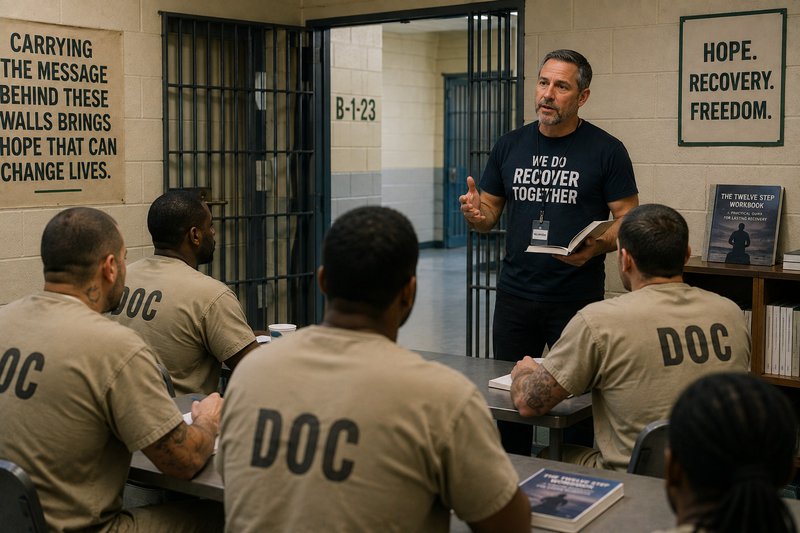
Correctional facilities represent another place where recovery support can make a meaningful difference.
Many incarcerated people have histories involving alcohol or drug problems. For some, substance use contributed directly or indirectly to the circumstances that brought them into the criminal justice system.
Incarceration may temporarily remove access to alcohol or drugs, but simply being separated from a substance is not the same thing as building a life in recovery.
Eventually, many incarcerated people will return to their communities.
The problems waiting outside may include damaged relationships, limited employment opportunities, financial difficulties, unstable housing, legal obligations, and reconnecting with family. Returning to the same neighborhoods and social environments can also mean encountering people, places, and situations associated with previous substance use.
Recovery work completed while incarcerated can therefore be valuable preparation for what comes next.
This is why volunteers who bring recovery meetings into jails and prisons perform such an important service.
For someone sitting inside a correctional facility, meeting a person who once experienced addiction and now lives a stable sober life can represent something that is difficult to provide through a pamphlet alone:
credible hope.
The volunteer is not saying that recovery makes life perfect.
The message is much simpler: Change is possible.
Supporting Recovery Behind the Walls Even If You Cannot Go Inside
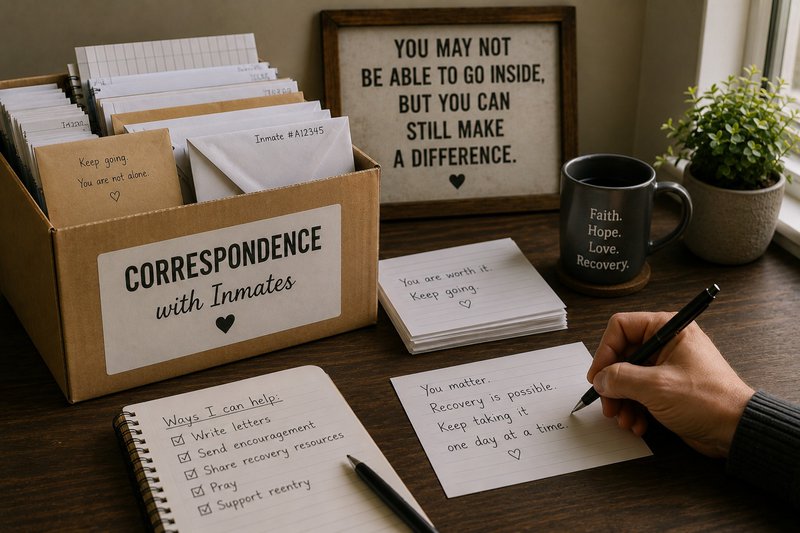
Not everyone can volunteer inside a correctional facility.
There may be background-check requirements, institutional restrictions, scheduling conflicts, transportation problems, or simply a limited number of volunteer opportunities.
That does not mean you cannot help. One practical form of service is helping make recovery materials available to incarcerated people.
Recovery workbooks can provide structure when someone has time to think seriously about addiction, consequences, relationships, behavior, and what needs to change before returning to the community. A workbook cannot replace professional treatment, peer support, or ongoing recovery involvement, but it can give someone a practical way to begin doing the work. For readers looking for a simple, printable starting point, these practical step-work work sheets offer guided prompts for reflection and accountability.
That is one of the reasons Recovery4Life.Store created a GoFundMe campaign to help provide recovery workbooks to people who are currently incarcerated. A portion of all sales at Recovery4Life.Store is donated to that fund. Contributions to the campaign help support the effort to place practical recovery resources into the hands of people who may not otherwise have access to them. If you or someone you love has ever struggled with alcohol or drug addiction and you want to help support carrying the message of recovery, please consider giving.
For someone on the outside, contributing toward a workbook may seem like a small act. For the person receiving it, that book could arrive at an important moment. Perhaps it comes at the moment they are finally ready to do something different.
There are no guarantees. Recovery never comes with guarantees. But we can make the opportunity available.
If you would like to support the effort, you can contribute to the Recovery4Life.Store GoFundMe campaign to help provide recovery workbooks to incarcerated people who aspire for a different life.
Service Can Be Especially Powerful When Nobody Knows You Did It
There is something worth considering about anonymous or quiet service. Not every act of generosity needs recognition. You do not need your name on a donation. Nobody needs to applaud because you stacked the chairs. The newcomer does not need to know that you arrived thirty minutes early to make sure coffee was ready. There is a particular kind of freedom in doing something useful when there is nothing to receive in return. It changes the purpose.
We are no longer helping because we want recognition, gratitude, influence, or praise. We are helping because somebody needed help and we were in a position to provide it. That is a valuable practice both in recovery and in life.
Service Beyond Recovery Meetings

We should also be careful not to define carrying the message so narrowly that we miss opportunities happening around us every day.
Recovery becomes visible to others through the way we live our everyday lives. The way we treat our family, follow through on commitments, and handle conflict at work can demonstrate how much has changed. Growth also shows itself when we apologize without making excuses or are willing to admit when we are wrong. Sometimes the message is carried simply by noticing that another person is struggling and choosing to make time for them.
Sometimes the most convincing evidence for recovery is not what we say in a meeting. It is what people see us doing when there is no meeting. If someone knew us during active addiction, they may remember chaos, broken promises, anger, manipulation, disappearing, excuses, or unreliability.
Years later, they may see someone completely different. They see: Dependable. Present. Honest. Useful. That transformation carries a message too.
Start With One Small Act of Service
You do not need to reorganize your life tomorrow. Start small. Get to your next meeting ten minutes early and ask if anything needs to be done. Introduce yourself to someone you do not recognize. Call someone you have not seen at a meeting recently. Offer somebody a ride. Volunteer for a meeting responsibility.
Ask a treatment facility whether outside recovery volunteers are needed. Find out whether a local correctional facility has a recovery meeting that needs support. Check on somebody who is struggling. Listen without immediately trying to fix them. There are opportunities everywhere once we begin looking for them.
Service does not have to be a grand and dramatic act.
We Keep What We Have by Giving It Away
One of the beautiful paradoxes of recovery is that something intensely personal eventually becomes something we share.
At first, we often need other people to show us that sobriety is possible. We may be welcomed by someone who remembers what it was like to walk through the door for the first time, while another person shares their story and helps us recognize that we are not alone. Along the way, people answer our questions, give us rides, and patiently listen when we need to complain or simply talk. They sit beside us as we try to make sense of a life that suddenly has to be lived without the substance, we once relied upon. Through all of these seemingly small acts, other people lend us hope until we begin to develop some of our own.
Then time passes. One day, almost without noticing it, we are no longer the newest person in the room.
Eventually, someone else walks through the door carrying many of the same feelings we once had. They may be frightened or embarrassed, skeptical that recovery can actually work, or angry about the circumstances that brought them there. At that moment, long-term sobriety may seem almost impossible to imagine. Thinking about staying sober for an entire year can feel overwhelming when simply making it through Tuesday seems difficult enough.
And now we are the person who can say:
“I understand. I remember. Come sit with us.”
That is how the message continues to move forward, passed from one person to another and carried beyond the walls of regular recovery meetings. It reaches people in treatment centers, correctional facilities, and throughout our communities. In this way, those who have experienced the possibility of recovery can share that hope with people who are still wondering whether a different life is possible.
Long-term sobriety is about much more than accumulating years without alcohol or drugs. It is about what we build during those years and what we do with the life recovery gives us.
We cannot recover for another person. We cannot guarantee what happens after we offer help. But we can make sure the hand of recovery is there when somebody reaches for it.
And sometimes, while extending that hand to someone else, we are reminded exactly why we never want to let go ourselves.