

You can learn how to quit drinking when your spouse still drinks, but it may require stronger boundaries, a more reliable support network, and a practical plan for alcohol-related situations. When your spouse continues to drink, you may also face alcohol in the house, drinking-related routines, social pressure, or the fear that your relationship will change.
You do not have to control your spouse’s choices to protect your own recovery. You can make a clear plan for your needs, communicate your boundaries, build support outside the relationship, and take the next step one day at a time.
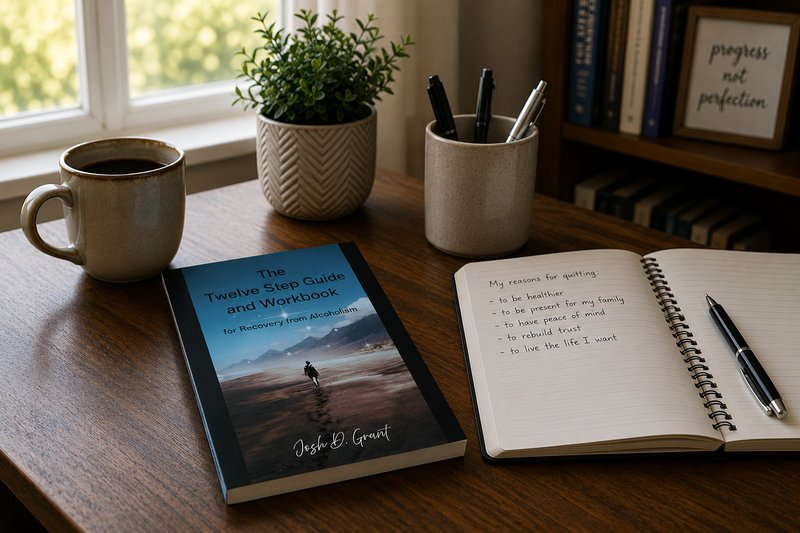
Start with your reason for quitting
Your spouse may not understand your decision at first. They may believe you can drink moderately, stop after one drink, or return to old routines without a problem. You do not need to win an argument before you begin recovery.
Start by putting your own reasons into words.
You might write:
- What drinking has cost you
- What you hope sobriety will make possible
- How drinking affects your health, work, relationships, or peace of mind
- What you want your life to look like six months from now
- What you are willing to change to protect your recovery
Your reasons do not need to sound impressive. A simple reason, such as wanting to wake up clear-headed or become more present with your family, can be enough to guide your next decision.
Talk with your spouse before making changes
Choose a time when neither of you is drinking and there is enough space for a calm conversation. Speak about your recovery as your responsibility, rather than presenting it as a demand that your spouse must stop drinking too.
You could say:
I am choosing to stop drinking. I know you may not be ready to make the same choice, but I need to make some changes at home so I can protect my recovery.
Be specific about what would help. For example, you may ask your spouse to:
- Keep alcohol out of shared living spaces
- Avoid offering you a drink
- Not ask you to buy alcohol
- Drink away from you when possible
- Avoid drinking during your highest-risk times
- Support alcohol-free activities at home
- Give you space to attend meetings, counseling, or other recovery support
Your spouse may agree to some requests and decline others. That information can help you decide what boundaries and backup plans you need.
Set boundaries instead of trying to control
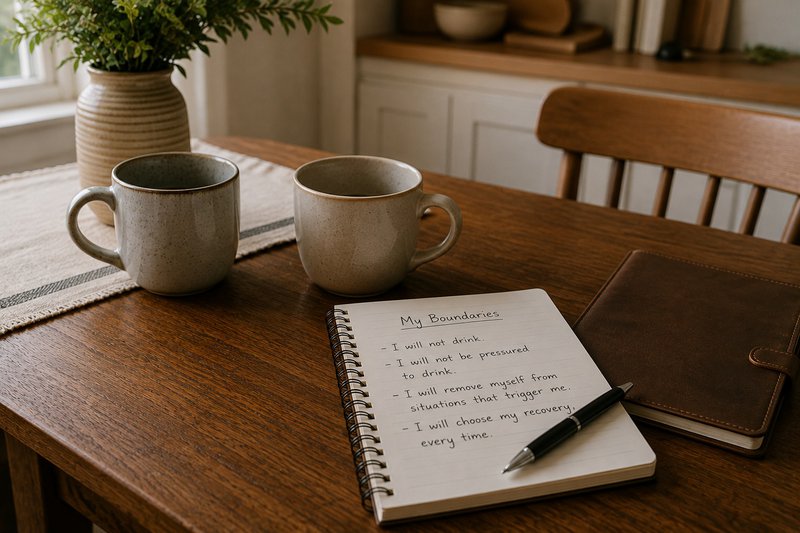
A boundary explains what you will do to stay safe and steady. It is different from a rule that attempts to control another person’s behavior.
When you are learning how to quit drinking when your spouse still drinks, boundaries can help you protect your recovery without turning every conversation into an argument about their drinking.
For example:
- Control: You are not allowed to drink in the house.
- Boundary: If alcohol is opened in the living room, I will go to another room, leave the house, or call a support person.
- Control: You cannot go to a bar with your friends.
- Boundary: I will not attend events where drinking is the main activity.
- Control: You need to stop drinking for me.
- Boundary: I will not stay in conversations that become hostile or pressure me to drink.
A boundary works best when it is clear, realistic, and connected to an action you can take. Do not create a boundary you cannot or will not follow.
Decide whether alcohol can stay in the home

For many people, seeing or smelling alcohol can create a strong urge to drink. NIAAA recommends removing alcohol from the home when possible after a drinking episode, along with avoiding situations that make drinking more likely. (rethinkingdrinking.niaaa.nih.gov)
If your spouse wants to keep alcohol at home, consider a direct conversation about safer storage. Options may include:
- Keeping alcohol in a locked or separate area
- Storing it somewhere you do not regularly use
- Asking your spouse not to drink in front of you
- Agreeing that alcohol will not be kept in the car
- Removing glasses, mixers, or other drinking cues from shared spaces
- Creating an alcohol-free area where you can relax
If alcohol in the home repeatedly leads to intense cravings or drinking, you may need a stronger plan. That could include staying with a supportive friend, spending evenings elsewhere, or discussing couples counseling and treatment options with a qualified professional.
Build a recovery routine that does not depend on your spouse
Your spouse may be supportive, but they cannot be your only source of recovery support. Build a daily structure that still works if they are drinking, busy, upset, or unavailable.
A simple routine might include:
- Check in with yourself in the morning.
- Review your reason for quitting.
- Attend a meeting, counseling session, or recovery group.
- Eat regular meals and drink water.
- Plan for your highest-risk time of day.
- Contact a sober support person before a craving becomes overwhelming.
- Write down what helped you stay alcohol-free.
A routine gives you something to return to when the day feels uncertain. It also reduces the number of decisions you have to make when you are tired, stressed, or emotionally overwhelmed.
Make a plan for evenings and weekends
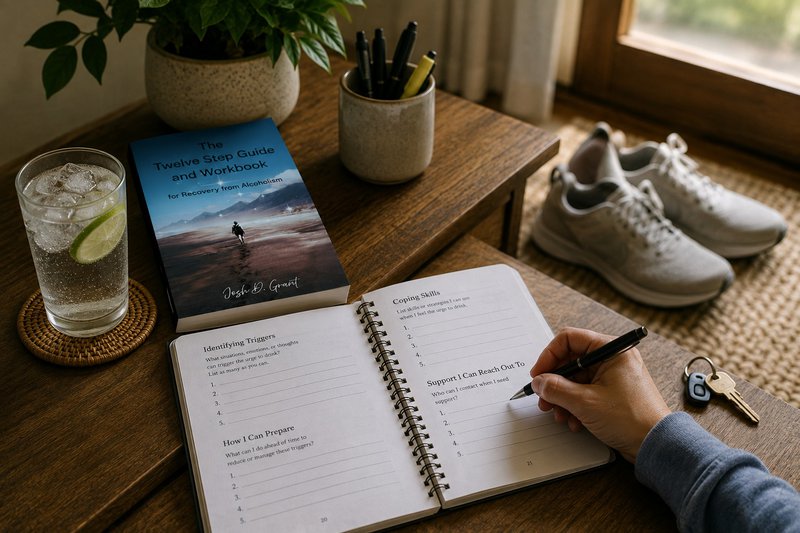
Drinking often becomes tied to specific times, places, and activities. Your spouse may continue the same routine, such as drinking while watching television, going out after work, or having alcohol with dinner.
Plan an alternative before the familiar routine begins.
You could:
- Take a walk
- Read or complete workbook exercises
- Call someone in recovery
- Attend an evening meeting
- Exercise gently
- Cook a meal
- Take a shower and go to bed early
- Visit a friend or family member
- Work on a hobby that keeps your hands busy
- Watch a show in a different room with a nonalcoholic drink
The goal is not to stay busy every minute. The goal is to create enough distance between you and the drinking routine to make a different choice possible.
Prepare for cravings without judging yourself
A craving is a signal, not an instruction. It may feel powerful, but you do not have to act on it.
When a craving appears, try this short process:
Notice
Name what is happening without criticism.
You might say, I am having an urge to drink because my spouse opened alcohol and I feel left out.
Change your setting
Move away from the alcohol. Go outside, change rooms, take a shower, or leave the event if you can do so safely.
Contact support
Call or text a sober friend, sponsor, counselor, peer-support contact, or trusted family member. Tell them plainly that you are having a craving and need help staying with your decision.
Delay the decision
Give yourself ten or twenty minutes before taking any action. During that time, drink water, eat something, walk, breathe slowly, or write about what you expect alcohol to do and what it has done in the past.
Return to your reason
Read the list you made when you began. You are not trying to solve your entire future in that moment. You are choosing what to do next.
NIAAA describes urges as common during changes in drinking and recommends planning ahead, identifying triggers, and using coping strategies. (rethinkingdrinking.niaaa.nih.gov)
Find support outside the relationship
A spouse who drinks may not be able to understand every part of your recovery. That does not automatically mean they cannot care about you. It does mean you need support from people who can help you practice sober living.
If you are trying to understand how to quit drinking when your spouse still drinks, outside support can give you practical help during cravings, conflict, and high-risk moments.
Consider connecting with:
- A sponsor or Twelve Step group
- A licensed addiction counselor
- A primary care provider
- An outpatient treatment program
- A therapist familiar with substance use and couples concerns
- A trusted friend or family member
- A family support group
- A sober living or recovery community
NIAAA notes that treatment may include behavioral care, medication, mutual-support groups, and couples or family counseling. A primary care provider can also help assess your drinking pattern, overall health, treatment needs, and possible referrals. (niaaa.nih.gov)
Your spouse can be part of your support system, but your recovery should not depend on their willingness to participate in every part of it.
Protect your privacy and your peace
Recovery can bring up personal experiences, relationships, and emotions that you may not want to discuss with everyone. You have the right to choose who receives details about your recovery.
You do not have to explain your decision repeatedly. A short response may be enough:
- I am not drinking today.
- Alcohol is not part of my recovery plan.
- I am taking care of my health.
- I do not want to discuss this while you are drinking.
- I am going to step away now.
If your spouse mocks you, pressures you to drink, threatens you, or becomes aggressive, treat that as a safety concern rather than a normal recovery disagreement. Reach out to a trusted person, counselor, domestic violence advocate, or emergency service for support. If you are in immediate danger, call 911.
Know when professional help is important
If you have been drinking heavily for a prolonged period, stopping suddenly can cause dangerous withdrawal. Symptoms may include nausea, a rapid heart rate, seizures, or delirium tremens. Talk with a healthcare professional before stopping so you can make a safe plan. (niaaa.nih.gov)
Seek urgent medical help for serious symptoms, including a seizure or severe confusion. For emotional distress, substance use crisis support, or thoughts of suicide, you can call or text 988 in the United States to reach the 988 Suicide & Crisis Lifeline. Support is available 24 hours a day, seven days a week. (samhsa.gov)
Books, workbooks, meetings, and worksheets can support recovery, but they are not substitutes for medical care, therapy, treatment, crisis services, or peer support.
What if your spouse will not support your sobriety?
You may be able to remain in the relationship while your spouse drinks, but the situation deserves an honest assessment. Ask yourself:
- Can I stay alcohol-free in our current home?
- Does my spouse respect my boundaries?
- Am I regularly exposed to pressure, conflict, or unsafe behavior?
- Do I have somewhere safe to go if I need space?
- Are we willing to work with a counselor?
- Is the relationship helping me build stability, or making recovery harder?
- What would I advise someone I love in this situation?
You do not have to make every relationship decision on your first day sober. Focus first on safety, support, and clarity. As your recovery becomes more stable, you may have a better view of what needs to change.
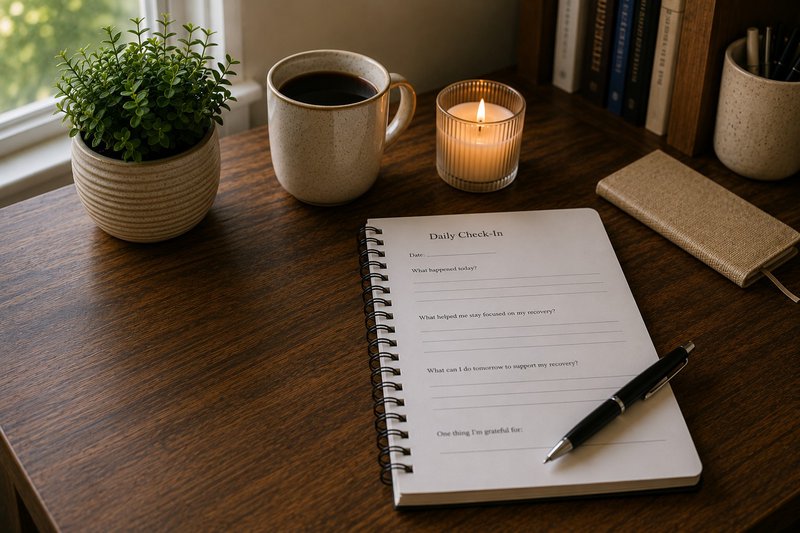
Use practical recovery tools
Writing can help you slow down and see patterns that are difficult to notice in the middle of a craving. You might keep a simple daily record with four prompts:
- What happened?
- What did I feel?
- What did I want to do?
- What helped me choose recovery?
You can also write a home alcohol plan, a list of support contacts, and a step-by-step response for drinking situations.

Recovery4Life offers practical recovery books and downloadable resources designed to support step work, cravings, emotional regulation, and daily routines. The First 90 Days Clean and Sober may be useful for building structure in early recovery, while the Twelve Step Guide and Workbook offers prompts for people working through the Twelve Steps. The Emotional Regulation Skills and Substance Use Disorder book can be helpful learning to process our emotions in early recovery. These resources are educational tools to use alongside appropriate professional and peer support. (recovery4life.store)
Take the next step today
You do not need your spouse to make the same decision before you begin making yours. You can quit drinking while someone you love continues to drink, but it may require stronger boundaries, a more reliable support network, and a practical plan for alcohol-related situations.
Today, choose one action:
- Call a healthcare professional if withdrawal may be a concern.
- Contact a sponsor, counselor, or recovery group.
- Ask your spouse for one specific change.
- Remove alcohol from your personal space.
- Write down your reason for quitting.
- Plan what you will do during your next craving.
- Attend one meeting or support appointment.
Your spouse’s drinking is their choice. Your recovery is yours. Take it one day, one boundary, and one next step at a time.