

Evenings can feel different in early recovery. The day may have been busy enough to keep difficult thoughts in the background, but quiet hours can bring cravings, loneliness, worry, or strong emotions to the surface.
A short evening reflection can help you notice what happened without turning the day into a courtroom. Five to ten minutes of honest review may show patterns, highlight support that helped, and make tomorrow feel a little more manageable.
The goal is not to create a perfect record. The goal is to pause, notice, and choose one useful next step. Doing this regularly can help develop new coping skills.
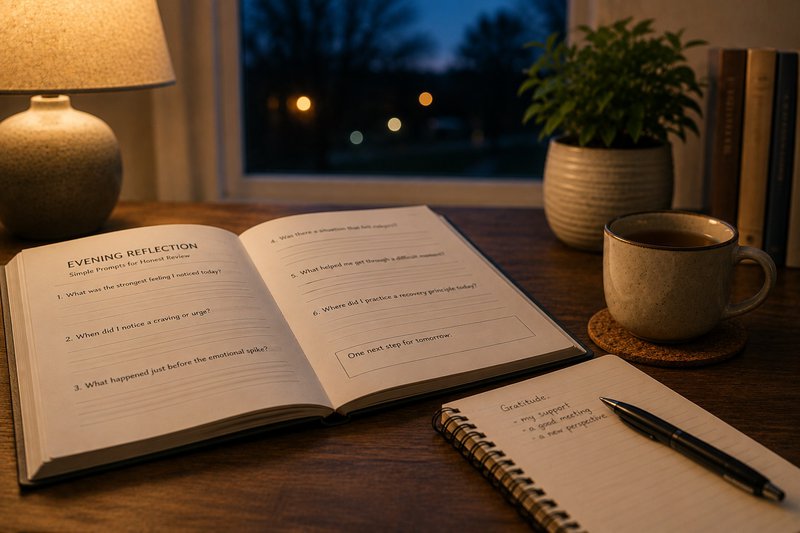
Why evening reflection can help in early recovery
Early recovery often includes changing routines, unfamiliar emotions, disrupted sleep, and situations that feel risky. When each day feels full, it can be hard to remember what led to a craving or what helped you move through it.
A simple reflection creates space to look back while the day is still fresh. This is an important exercise in self-care. Over time, your notes may help you identify:
- Times when cravings tend to appear
- People, places, or emotions connected to urges
- Physical signs of stress or exhaustion
- Activities that helped you feel more settled
- Support you used or could use sooner
- Small choices that helped you stay connected to recovery
This practice is not about blaming yourself for having a hard day. Cravings and emotional spikes can happen without meaning that you have done anything wrong. Reflection is a way to gather information and prepare for the next moment.
Keep the routine low pressure
A reflection practice is more likely to become part of your routine when it feels manageable rather than like another obligation. Managing expectations is important: you do not need to examine every thought, feeling, or event from the day. A few honest observations can be more useful than turning reflection into a long or emotionally exhausting exercise.
Try starting with just five minutes. Use whatever format feels natural—a notebook, printed worksheet, or notes app—and choose a time when you have some privacy and are unlikely to feel rushed. That might be after dinner, before a meeting, or while winding down for sleep. The goal is to create a simple routine you can realistically return to, even on difficult days.
You might use the same three steps each evening:
- Notice what happened.
- Name what helped or felt risky.
- Choose one next step for tomorrow.
You do not need to answer every prompt each night. Select two or three questions that match the day.

Early Recovery simple prompts for honest evening review
The best prompts are clear, specific, and free from judgment. They invite observation instead of demanding an explanation for everything.
1. What was the strongest feeling I noticed today?
You may have felt anxious, angry, lonely, restless, sad, hopeful, numb, or relieved. Try to name the feeling without judging it.
If you are unsure, describe what you noticed in your body. Perhaps your shoulders were tense, your thoughts were racing, or you felt unusually tired. Physical clues can help you recognize emotional changes earlier next time.
If strong emotions keep showing up, it may help to build a few practical skills for pausing, noticing triggers, and responding with more care. Practice emotional coping skills through guided reflection exercises designed for difficult feelings, cravings, and stressful moments.
2. When did I notice a craving or urge?
Write down when the craving appeared and what was happening around that time. You might include:
- The approximate time
- Where you were
- Who you were with
- What you had eaten or whether you were tired
- What you were thinking about
- How intense the craving felt
There is no need to make the note perfect. A short description such as afternoon, alone in the car, tired after work may be enough to reveal a pattern later.
Keeping a brief record of cravings and triggers can help you notice patterns over time, including the people, places, feelings, or times of day that make an urge more likely.
3. What happened just before the emotional spike?
Strong emotions often seem to arrive suddenly, but there may have been a moment, conversation, thought, or physical need that came first.
Ask yourself:
- Did I receive upsetting news?
- Did I feel criticized, ignored, or misunderstood?
- Was I hungry, angry, lonely, or tired?
- Did I skip a meeting, call, meal, or medication routine?
- Was I already carrying stress from earlier in the day?
This is not an attempt to find fault. It is a way to understand what your nervous system may have been responding to. It is a way to understand what your nervous system may have been responding to and identify healthy ways to respond next time.
4. Was there a situation that felt risky?
A risky situation may involve a person, place, conversation, online activity, argument, financial stress, or unplanned change in routine.
Try to describe the situation plainly. Avoid labels such as good or bad. Instead, write what made it difficult and what you might do differently if it happens again.
For example:
- I passed a place connected to past use.
- I spent time with someone who was using.
- I felt tempted to isolate after an argument.
- I had extra money and no plan for the evening.
- I became overwhelmed and stopped answering calls.
Naming a risk early can make it easier to create a plan before the same situation returns.
5. What helped me get through a difficult moment?

Recovery support does not have to look dramatic. You may have taken a walk, called someone, attended a meeting, prayed, eaten a meal, rested, changed locations, or waited for the urge to pass.
Write down what helped, even if it only helped a little. This gives you a list of actions to remember on another difficult day.
Connection can be one of those helpful actions. A short call, a meeting, or an honest check-in with someone safe can make a difficult moment feel less isolating. Building sober support connections can help you stay grounded when loneliness or disconnection begins to fuel an urge.
You can also ask:
- Who did I reach out to?
- What did I do with my hands or body?
- What helped me feel less alone?
- What made the next ten minutes safer?
- What support could I use earlier next time?
6. Where did I practice a recovery principle today?
For people working through the Twelve Steps, this prompt can connect daily life with step work without making the reflection feel like a test.
You might reflect on honesty, willingness, acceptance, patience, service, accountability, gratitude, or making an amends when appropriate. Keep the question practical:
- Where was I honest?
- When did I pause before reacting?
- Did I accept help?
- Did I make a repair, or identify one that may be needed?
- Where did I practice willingness instead of trying to control everything?
If you are unsure how a specific situation fits with your program, a sponsor, counselor, or trusted recovery group may help you think it through.
7. Did I notice a moment of support or spiritual connection?
Support and spiritual connection can be quiet. They may appear through a conversation, a meeting, time in nature, prayer, meditation, music, service, or a sense that you did not have to handle everything alone.
Consider asking:
- When did I feel connected today?
- What reminded me that support was available?
- Did I ask for guidance or become willing to listen?
- What gave me a small sense of peace?
- Where did I experience gratitude, even briefly?
This prompt is not meant to force a particular belief. Use language that fits your understanding of spirituality, faith, community, or personal values.
Recovery can be supported in many ways, including self-care, trusted relationships, peer support, faith or spirituality, treatment, and daily routines that help you feel safer and more connected. Explore recovery support options and keep the supports that fit your own path.
8. What do I need before I go to sleep?
Sometimes the most useful reflection is a practical one. Early recovery can become more difficult when basic needs are overlooked.
Before bed, consider whether you need:
- Water or a simple meal
- A calming activity
- A phone call or meeting
- A safer place to spend the evening
- A plan for transportation
- Medication or health support as directed
- Less screen time
- Rest without trying to solve every problem tonight
You do not need to fix your whole life before going to sleep. Focus on the next supportive action.
9. What is one thing I can plan for tomorrow?
End with a small, specific plan. Choose something that is within your control and easy to remember.
Examples include:
- Call my sponsor before lunch
- Attend a recovery meeting
- Eat breakfast before work
- Avoid a certain route
- Take a ten-minute walk
- Write down three phone numbers
- Ask for help with one appointment
- Put my workbook beside my morning coffee
A next-day plan turns reflection into preparation. Keep it small enough that you can follow through even if tomorrow feels difficult.
In early recovery, simple routines can make difficult days feel more manageable. For additional guidance on cravings, daily structure, and relapse-prevention planning support for your first 90 days.
A five-minute evening reflection template for early recovery
If a blank notebook feels like too much, a guided format can make it easier to begin. Use structured recovery reflection worksheets for additional prompts and writing space you can work through at your own pace. You can use the following structure in a notebook or worksheet:
Tonight I noticed
- My strongest feeling was:
- A craving, urge, or risky moment showed up when:
- What happened just before it was:
- What helped, even a little, was:
Support and connection
- Someone or something I connected with today was:
- A recovery principle I practiced was:
- Support I may need tomorrow is:
My next step
- One thing I will do tomorrow to support my recovery is:
- One person or resource I can contact is:
If you only have energy for one question, ask: What would make the next few hours safer and more supportive?
How to keep early recovery reflections from becoming self-criticism
Reflection can become unhelpful when every answer turns into an accusation. If you notice thoughts such as I should have handled this better or I always ruin everything, try rewriting them as observations.
| Instead of | Try this: |
|---|---|
| I was a mess today | I felt overwhelmed after work and did not reach out until late in the day |
| I cannot handle cravings | The craving was strongest when I was tired and alone. A call and a change of location helped |
The second version does not ignore difficulty. It gives you information you can use. Early recovery can include progress and difficult days at the same time. Recovery takes time and practice, so a hard evening does not erase the supportive choices you have made or the help you can ask for next.
You may also finish with one statement of patience:
- I am learning what supports me.
- Today was difficult, and I stayed willing to take the next step.
- I can ask for help before the situation becomes urgent.
- Tomorrow gives me another opportunity to practice recovery.

Guidance for supporters and professionals
Supporters, counselors, treatment professionals, and group leaders can introduce evening prompts as an invitation rather than an assignment. Some people in early recovery may already feel watched, evaluated, or pressured to provide the right answers.
Explain that the purpose is to notice patterns and strengthen support, not to grade recovery. Offer a short list of prompts and let each person choose which questions feel useful.
A group or session might include:
- One minute of quiet breathing or grounding
- Two selected reflection prompts
- Optional sharing
- One practical plan for the next day
- A reminder of available support
Protect privacy and anonymity. Participants should not be required to share details they do not feel ready to discuss. If a response suggests immediate danger, severe withdrawal, thoughts of self-harm, or an urgent risk of substance use, follow appropriate professional and emergency procedures.
It can also help to ask what would make the practice feel safer. One person may prefer writing alone. Another may need a staff member nearby, a quiet room, a phone call, or a simple verbal check-in instead of a worksheet.
Make the practice your own
There is no single correct way to reflect in the evening. Some people prefer writing in complete sentences. Others use short phrases, checkboxes, or a simple rating from low to high. You may want separate prompts for cravings, emotions, relationships, spiritual connection, and next-day planning.
The most useful routine is one you can return to without fear or shame. Start small, tell the truth as gently as you can, and use what you notice to build support for tomorrow.
Recovery is made up of many ordinary decisions. A few quiet minutes at the end of the day can help you recognize those decisions, learn from difficult moments, and stay connected to recovery, whether you are stepping away from alcohol, drugs, or another harmful pattern.